Ship sizes / Capesize: size, capacity and trades
Capesize: size, capacity and trades
A Capesize is a large bulk carrier of roughly 120,000 to 200,000 deadweight tonnes, most often around 180,000. It carries iron ore and coal and is too big for the original Panama Canal locks.
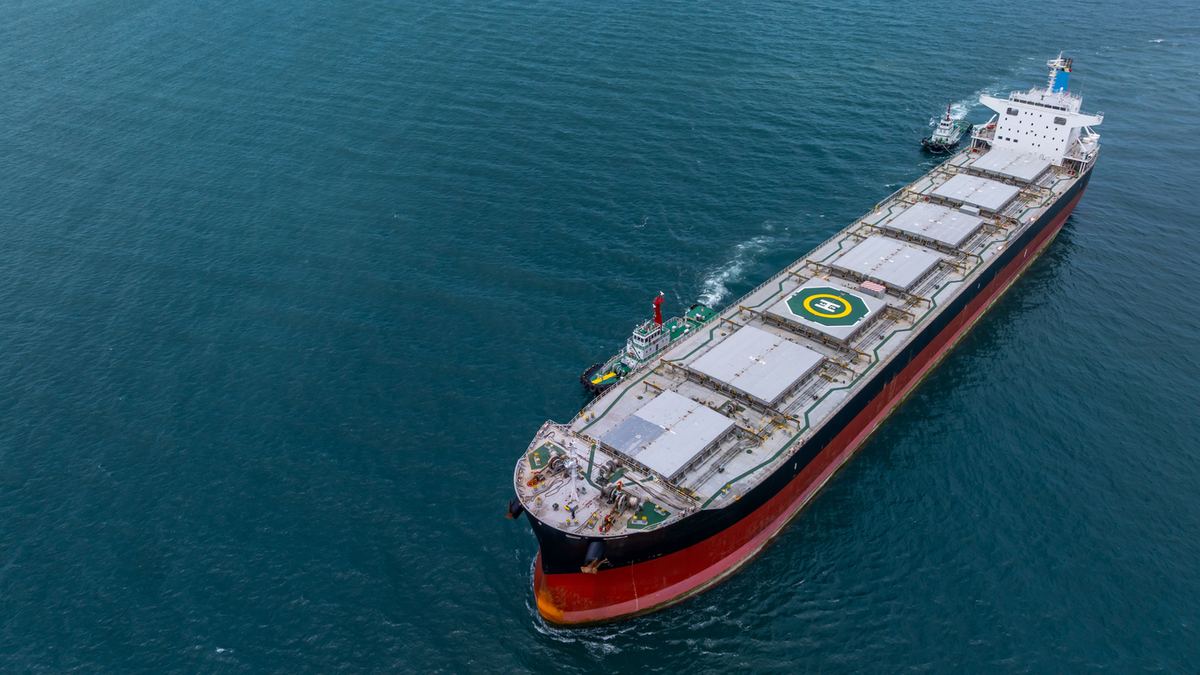
Key facts
| Capesize | |
|---|---|
| Deadweight | 120,000 to 200,000 tonnes, typically about 180,000 |
| Cargoes | Iron ore and coal |
| Holds and gear | Nine holds, gearless |
| Typical length and beam | About 290 m by 45 m |
| Next size down | Post-Panamax |
| Next sizes up | Newcastlemax, then very large ore carriers of up to 400,000 tonnes |
Why "Cape"
Ships this size could not use the Panama Canal and, in earlier decades, could not pass Suez laden. They had to sail round the Cape of Good Hope or Cape Horn. The name stayed after the canals were enlarged.
Where Capesizes trade
Two flows dominate: iron ore from Brazil and Western Australia to China, and coal from Australia, South Africa and Colombia. Few ports are deep enough, so the same terminals appear in fixture after fixture.
How they are chartered
Voyage charters in dollars per tonne and time charters at a daily rate, usually on GENCON or NYPE forms. Charterers are miners, steel mills, utilities and large operators. Capesize rates swing harder than any other dry bulk class because the cargo base is so narrow.
Capesize among the other classes
| Class | Deadweight (tonnes) |
|---|---|
| Mini bulker | Under 10,000 |
| Handysize | 10,000 to 39,999 |
| Handymax | 40,000 to 49,999 |
| Supramax | 50,000 to 59,999 |
| Ultramax | 60,000 to 66,999 |
| Panamax | 67,000 to 79,999 |
| Kamsarmax | 80,000 to 86,999 |
| Post-Panamax | 87,000 to 119,999 |
| Capesize | 120,000 to 199,999 |
| Newcastlemax | 200,000 to 219,999 |
| Very large ore carrier | 220,000 and above |
Class names are market shorthand, not regulation, and sources differ at the edges. When you list or charter a ship, the measured deadweight is what counts. See all ship sizes.
Put it into practice
FindAVessel lets cargo owners post a full shipload and receive firm offers from verified vessel owners and brokers, with subjects, payment and the time log in one record.
Published 22 November 2026. General information for people new to chartering, not legal advice.